FLEXIBLE AND EXTRA FLEXIBLE WELDING CABLE
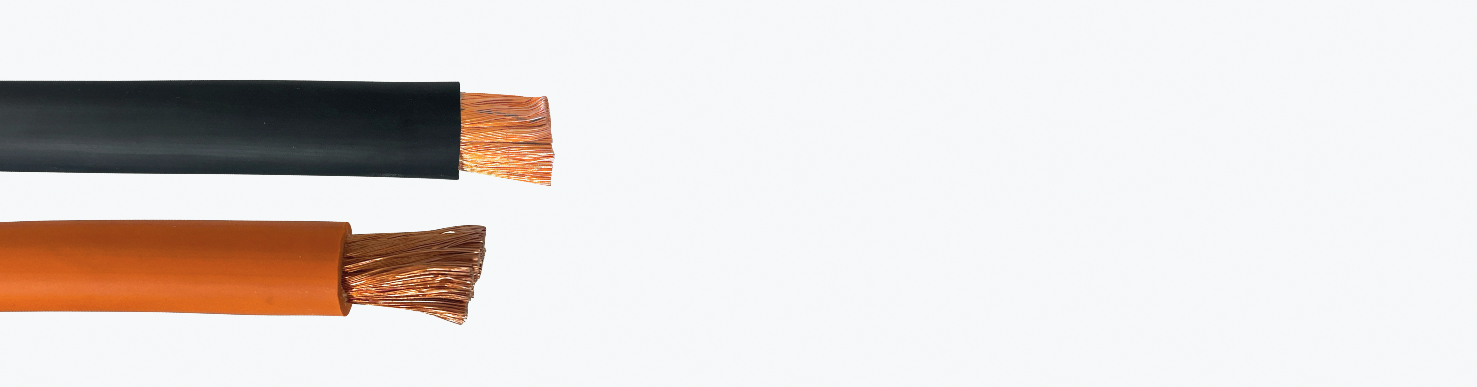
Welding cable is a highly specialized, portable power cable designed to carry high-amperage currents under conditions of extreme physical abuse. Constructed with thousands of fine-stranded bare copper conductors, these cables are categorized by their flexibility: Class K (Standard Flexible) and Class M (Extra Flexible). The high strand count allows the cable to be easily maneuvered around corners, through tight spaces, and over rough shop floors without kinking or internal conductor fatigue. Encased in a heavy-duty EPDM rubber or Neoprene jacket, these cables are built to resist sparks, abrasion, grease, oil, and water. While primarily used for arc welding leads, their superior conductivity and flexibility make them the industry standard for battery leads, temporary power bypasses, and high-current grounding applications.
Installation Note: When selecting welding cable, always calculate the total circuit length (the sum of the lead and the ground) to ensure the gauge is sufficient for the amperage. A cable that is too small for the load will cause excessive voltage drop and heat, leading to poor weld quality and potential jacket failure. When terminating Class M cable, it is highly recommended to use copper ferrules or heavy-duty lugs specifically designed for fine-stranded wire to ensure a secure, low-resistance connection that won't vibrate loose.


 Solid THHN/THWN-2 WireFrom $0.20/ft
 Solid THHN/THWN-2 WireFrom $0.20/ft