SECURITY CABLE
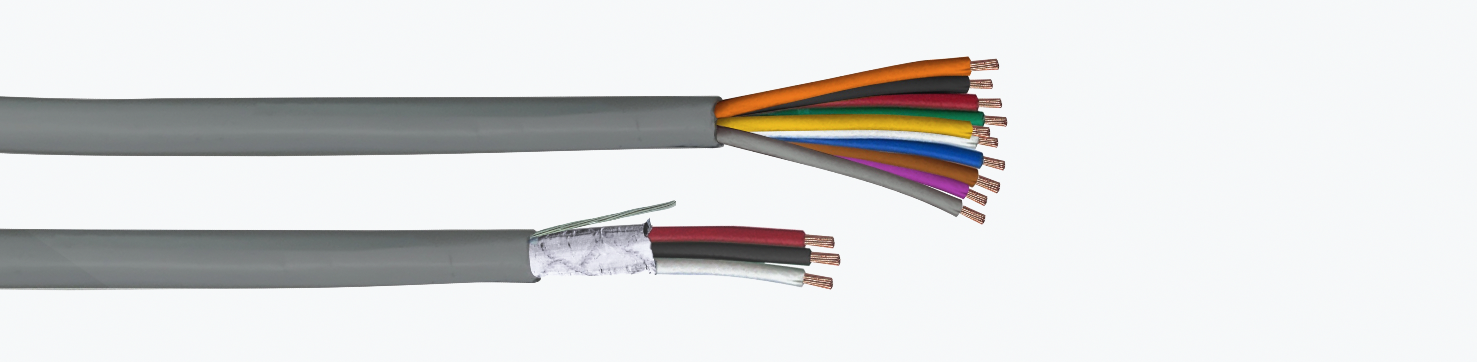
Security cable is a versatile, multi-conductor signaling wire designed for low-voltage applications in residential and commercial protection systems. Often referred to as "alarm wire" or "station wire," these cables are the backbone of modern security infrastructure, connecting control panels to peripheral devices such as motion detectors, door/window contacts, glass-break sensors, and digital keypads. Available in various gauges (typically 22 AWG to 18 AWG) and conductor counts, security cables are offered in both shielded versions—utilizing an aluminum foil wrap and drain wire to block electromagnetic interference—and unshielded versions for standard installations. With high-purity copper conductors and durable PVC jackets rated for Riser (CMR) or Plenum (CMP) environments, these cables ensure consistent signal integrity and long-term system reliability.
Installation Note: When routing security cable, avoid running it parallel to high-voltage AC power lines (120V/240V) to prevent induced electrical noise from triggering "false alarms." If you must cross power lines, try to do so at a 90-degree angle. Additionally, for long-distance keypad or siren runs, consider using a larger 18 AWG wire to minimize voltage drop and ensure the peripheral device receives adequate power to function correctly.


 Solid THHN/THWN-2 WireFrom $0.20/ft
 Solid THHN/THWN-2 WireFrom $0.20/ft