
From $0.20/ft

128 Products
-
 Solid THHN/THWN-2 WireFrom $0.20/ft
 -
 Solid THHN/THWN-2 WireFrom $0.20/ft
 - Solid THHN/THWN-2 WireFrom $0.20/ft
- Solid THHN/THWN-2 WireFrom $0.20/ft

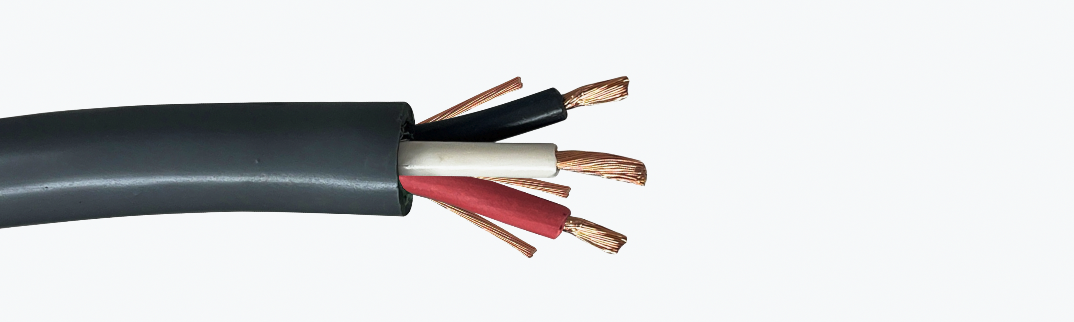
Bus drop cable is a specialized, highly flexible electrical cable designed to deliver power from overhead busway systems to machinery and equipment in industrial and commercial environments. It is primarily used for connecting portable or stationary equipment to a power source, enabling easy relocation of machinery without complex rewiring. This makes it ideal for dynamic settings like assembly lines and factory floors.
Bus drop cables are engineered for demanding industrial conditions. Key features include:
Bus drop cables are typically manufactured to meet rigorous industry standards and approvals, including:
Yes, bus drop cables are designed for versatility and are suitable for use in both indoor and outdoor applications. They are also rated for installation in wet or dry locations, making them adaptable to various industrial environments.
The robust PVC jacket of bus drop cable provides excellent resistance to a variety of harsh industrial elements, including:
Bus drop cables are designed for flexible connections from overhead busways to equipment, allowing for easy disconnection and relocation of machinery. While they offer flexibility, they are not intended for permanent fixed wiring of a building. The National Electrical Code (NEC) outlines specific requirements for their use as branches from busways, including support intervals (e.g., every 8 feet and within 6 feet of the busway plug in industrial settings).
(833) 268-8644
Bus Drop Cable is a heavy-duty, multi-conductor industrial power cable engineered to connect overhead busways and overhead duct systems to stationary or movable equipment, machine tools, and shop machinery. Operating at 600V, this cable is designed for overhead drop applications in industrial plants, machine shops, and manufacturing facilities where flexible, reliable branch power is required. Constructed with finely stranded or annealed copper conductors, individual color-coded PVC insulation, and a high-performance, flame-retardant PVC or Neoprene outer jacket, Bus Drop Cable withstands the constant exposure to industrial oils, cutting fluids, grease, lubricants, and mild mechanical abrasion common in heavy shop environments.
Get this thing filled up so you can help Wire America!